Dough
49%
Hydration
Low and firm — the opposite of a slack Neapolitan. About 20% semolina in the flour and a healthy dose of olive oil are what make the baked base nutty, thin, and crisp.
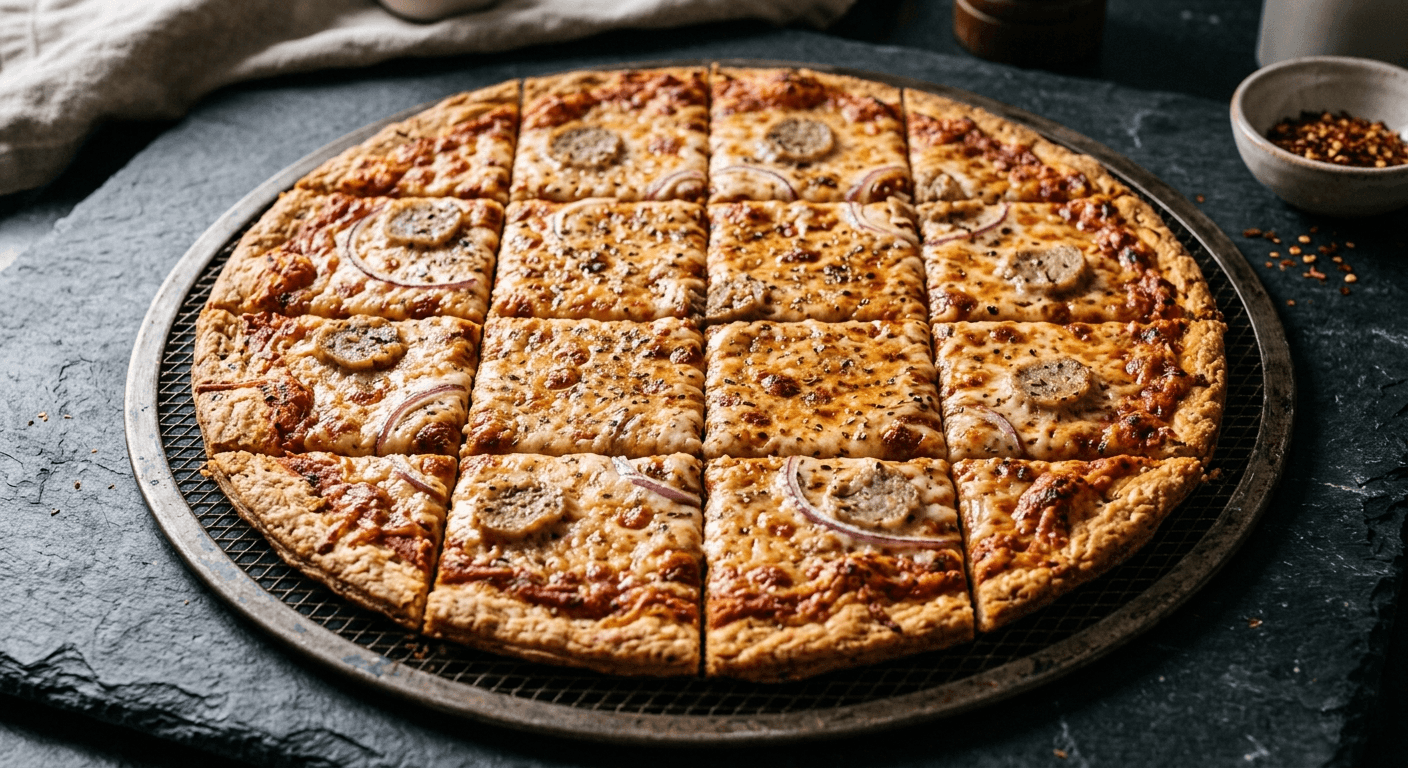
The Roman round, the everyday opposite of a Neapolitan. Where Naples wants a pillowy, blistered cornicione, Rome wants the whole pie thin and crisp — scrocchiarella, the one that crackles. A firm dough rolled out flat, baked fast and hot, eaten by the slice off a plate.
Rome has two great pizza traditions. Pizza in teglia is the bakery-counter slab, sold by weight and cut with scissors. Pizza tonda — tonda simply means round — is the sit-down pizzeria pie: one per person, eaten with a knife and fork, defined by how thin and how crisp it is.
The dough is the inverse of Neapolitan: lower hydration, a little olive oil for crispness, and often a measure of semola (durum semolina) blended into the flour for a nutty flavor and a crunchier base. It's stretched or rolled out flat — no thick rim, no airy crumb. Romans call the crispest version scrocchiarella, from scrocchiare, to crackle.
Toppings stay restrained so the thin base can carry them without going soggy — a thin tomato, a little mozzarella, maybe a few anchovies or a scatter of vegetables. The bake is hot and fast on a stone or steel; the whole thing is about the snap.
Firm, low-hydration dough (~49%) cut with ~20% semolina and a generous glug of olive oil. Long ferment (8–10 hours at room temperature, or up to 3 days cold). Rolled or stretched superthin into a round — no cornicione. Light toppings, thin sauce. Baked hot on a steel or stone, 6–8 minutes, until crisp.
Low and firm — the opposite of a slack Neapolitan. About 20% semolina in the flour and a healthy dose of olive oil are what make the baked base nutty, thin, and crisp.
A small, firm ball stretched or rolled flat to a thin 12" round. Cracker-flat through the bake, with no puffy rim — the crisp is the whole point.
Fully preheated steel or stone on the upper-middle rack. It bakes fast because there's so little mass — watch for color and the crackle, not the clock.
Opens the dough calculator with Pizza Tonda pre-selected. Pick portions and a ferment; we'll handle the low-hydration, semolina-blend math and the superthin shaping notes.